
My Favorite Portfolio Image Is the Result of
Self-Plagiarism
Turning AI into the Photographer’s Friend
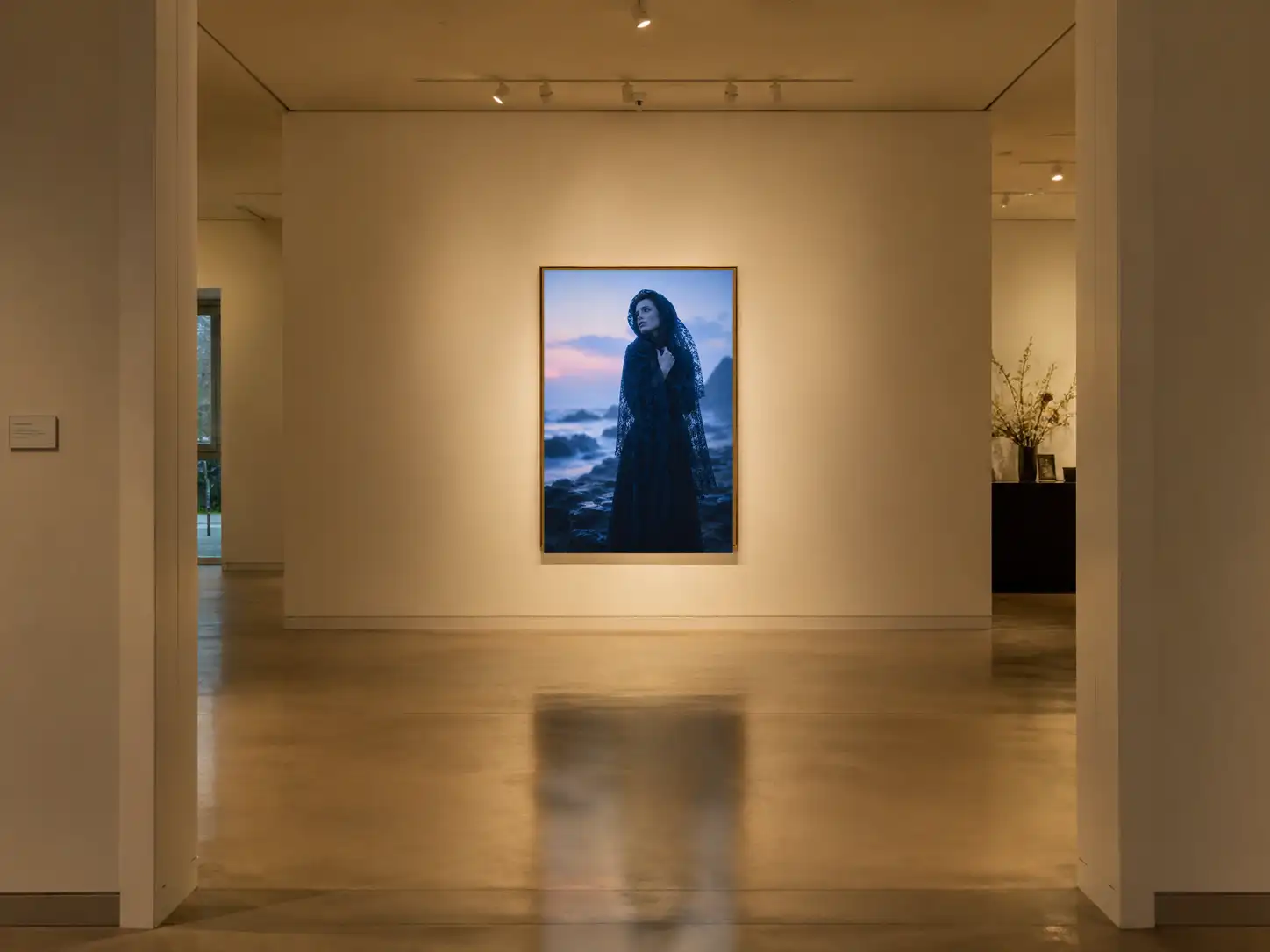
Of the many thousands of shoots I’ve done in my long career, one stands out as my favorite.
I call it “Rhythms in Blues,” and did it over 25 years ago. The shoot was very challenging due to my wildly enthusiastic plan and unrealistic expectations. I adopted lofty artistic goals to make it stand out from the everyday fashion shoots I did for a living. Since I was the client this time, I could have some fun with it.
I used three camera bodies to shoot three kinds of film: Black-and-white, color negative, and tungsten slide film. My model and make-up artist were top-notch, as good as you could ever hope to work with on a creative shoot. To achieve the strong blue color cast that would support the emotional mood I sought, we shot on a rainy, foggy day, right after sunset. All the variations in film, locations, and poses would have to be done within a 30-minute time window under difficult lighting conditions.
When the film came back from the lab, I was pleased at first. Then disappointed. I had failed to fully achieve my artistic goals.
Then one day I read a piece from another photographer who clarified the problem. Yes, we failed to completely achieve our plan. But the problem stemmed from the plan itself. It was overly ambitious and asked us to do the impossible. The failure was in the planning rather than the execution.
Eventually I came to appreciate what we had accomplished. My makeup artist, who was also my main creative partner, opened my eyes to the beauty of our images. Then, when I showed them to the top editors of European fashion magazines and to the top model agents, they were overwhelmed with that particular shoot.
Offers of assignments flooded in, especially from the top editorial people in Milan. It brought me a new level of respect from clients and collaborators.
And I’ve enjoyed it—until now.
In experimenting with using AI as a creative partner, I began applying it to past shoots, including “Rhythms in Blues.” I’m doing this to discover how to apply it to future shoots that haven’t been done yet.So I asked ChatGPT Images 2.0 to give me six variations on one of the images from the shoot.
Here they are. The original is on the left. There are variations in grain, a new background, color from blues to more of a full range, slight changes in posing, and contours, etc. My original intentions are still intact. But the refinement in the artistic expression is clear.
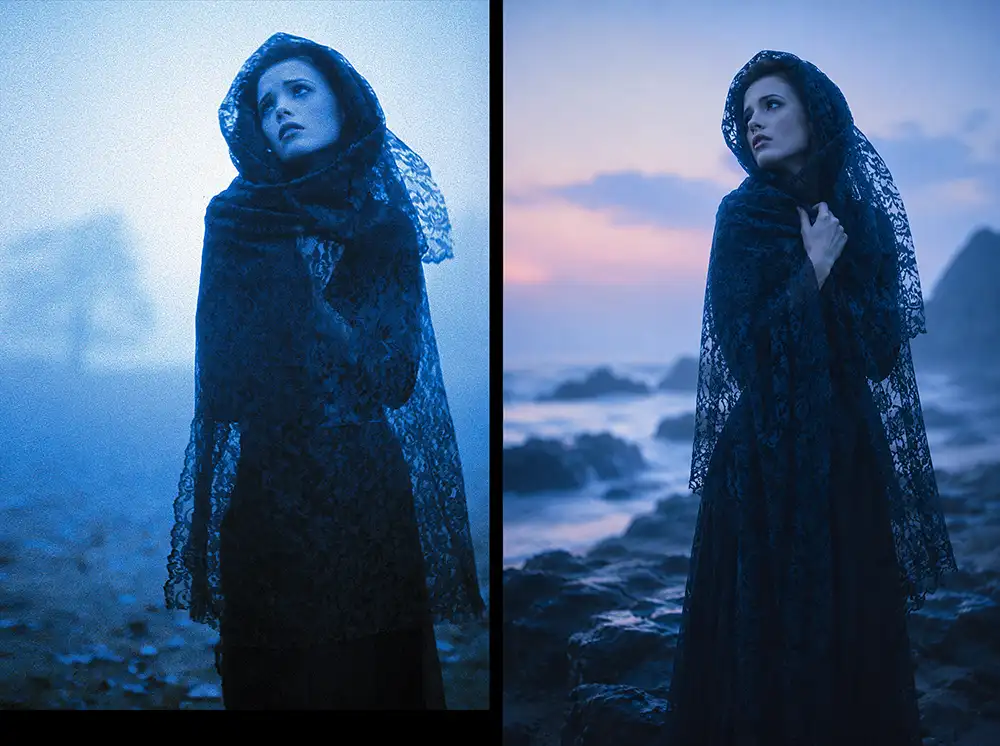
I like the new images. And one of them I like better than the others, even better than the finished images from the original shoot! And some of those images had been my favorites for a long time.
These new images were made by plagiarizing my own images. The good news is that it also means that, at least under some circumstances, I now have a creative partner once again.
Where did these new, finishing touches come from?
Immediately, they came from the AI. But ultimately they came from the cultural body of human image-making through the ages. AI is drawing from the collective artistic vision of humanity in a wide range of cultures.
This common culture taught painters how to paint, sculptors how to sculpt, and photographers how to photograph. That’s the way it’s always been.
Now with AI, there’s a way for willing creators to get further access to that cultural treasure and let it influence our work.
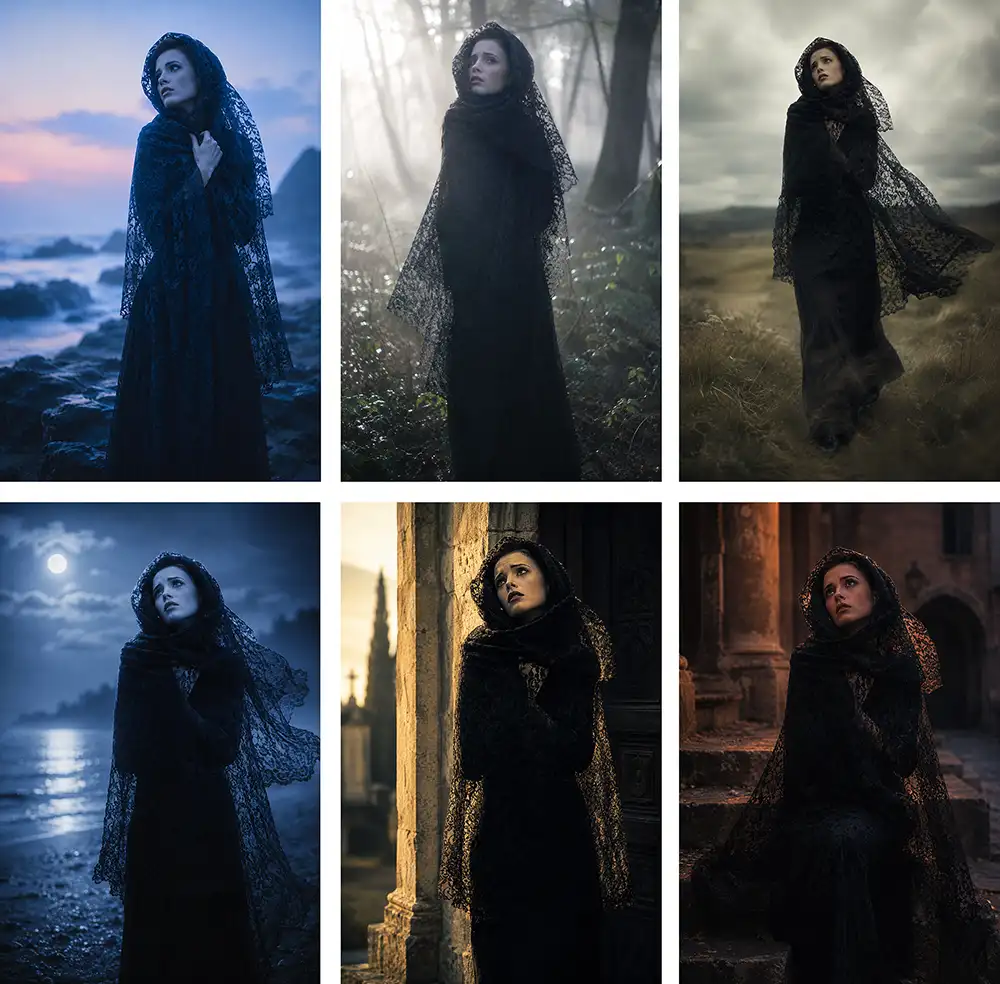
Six variations on the original image by AI
Isn’t it all a big ripoff of earlier artists?
There’s a loud contingent of photographers who will quickly and sometimes angrily point out that this is just theft, that the AIs were trained on our work without paying us for it.
Here’s my controversial response. I always felt that the right to intellectual property is just another species of colonialism, like Columbus “discovering” America.
In my early days, I entered some photo contests. I usually won second place. (Always a bridesmaid, never the…) Sometimes at the awards reception, people would come up to me and lavishly praise some of the ideas they saw in my images. I certainly appreciated the admiration, but was always a little embarrassed by it.
You see, I don’t believe in the cult of originality. It’s short-sighted at best. When I photograph a beautiful sunset, it is always influenced by the thousands of other beautiful sunsets I’ve seen in photographs, paintings, and movies. How much of my interpretation is really mine?
I like Newton’s statement that he was able to see further than some men, because he stood on the shoulders of giants who came before him. To some extent, all creators do that, and the better creators do it more often.This is one of my favorite images from the original shoot. It’s one of the main shots in the pictorial. I could tell you so many stories about how this one image opened doors for me.
Many clients have loved it and hired me because of it. Models and support artists wanted to work with me because of this image. I even got two offers to be Director of Photography for their films.
But I once saw almost the same shot in a French movie. That cinematographer didn’t copy it from me, and I didn’t copy it from him. We both “trained” our visual tastes, preferences, and ideas on the same corpus of work. Some deposit more value into that body and some less. Some take more out than others, some less.
The next generation of creators won’t start with a tabula rasa, but with a broad tradition of visual ideas that goes back to the beginning of humanity. Some of these ideas are related to each other. Others are oppositional. It’s a widely diversified collection of impressions.
How is the way AIs are trained any different from the way we train ourselves, either in school or on our own?
When people see a work as original, it’s usually because they lack the historical knowledge to see where those ideas came from. I suppose we could continue to devise pedantic formulas to separate pieces of original from derivative elements, somewhat as we do now, but that project is rather silly and arbitrary.
Maybe being a skilled creator means just having a facility for accessing that body of visual imagery to produce new works that contribute to our common cultural accumulation.
John Manning