
JPM Writer’s Bio–The Long Story
Technical Writing
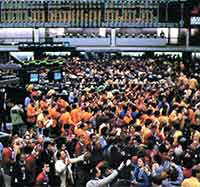
A novel on my adventures as a silver and goldtrader was my first attempt at professional writing. After 11 years on the trading floor as a broker and trader, I had lots of exciting stories to tell.
The trading experience in my youth taught me a bottom-line orientation. Many business people lack that sense of direction and allow themselves to believe lots of BS.
 They are never clear on how to gather, process, or evaluate the right info. A good trader never makes those mistakes.
While working with older and more knowledgeable traders, he learns to qualify his opinions.
Don’t buy 100 silver contracts if you’re only 25 contracts sure.
It came naturally to me. Since my education in college and graduate school was in theoretical physics and philosophy of science, rigorous thinking and Bayesian probability were already part of my mentality.
While working on the novel, I thought it good to also do something immediately rewarding. Most of my university courses were in science and mathematics. So I chose technical writing.
I wrote an installation and maintenance manual for chiller barrels. These are the components in industrial cooling systems that keeps them cool.
 The owner of the company told me that the brochure saved his company a lot of money with international customers.
Without clear installation and operation manuals, their customers were damaging the equipment and then making warranty claims. The project was easy and well paid.
When I received printed copies, I was embar-rassed. They used the graphics I made as a mock-up for a real designer. At the time, I had no graphic skills and little design sensitivity. I made circles by tracing with a pencil around caps from pickle jars.
These were in my pre-computer days, before Illustrator and Photoshop were even invented. Before I started learning from books and classes on graphic design, especially layout and typography.
It hurt to see my pre-literate drawings on the printed piece. Even then I had enough taste in graphic design to know how bad they were.
Advertising Copywriting
After a while, I craved more excitement and challenge–and pay. So I moved from technical writing to writing ad copy. I enjoyed it a lot.
 First was direct response—hearing aid replacements and medical products like self-testing supplies sold through self-mailers.
This was a lucky break for any beginning writer, because it was always results oriented. When I would go back to see the client, he would tell me how many hearing aids he sold from the last sales letter. The exact number!
He would mention by how much I beat his control to the nearest tenth of a percent. No BS, just facts.
That he knew the sales from every zip code was amazing to me. My previous advertising experience was doing radio advertising for a small chain of retail stores of which I was the founder and a partner.
We started with a small budget and then grew it into a sizable schedule on several stations. We ran about one spot per hour throughout the day and night. I always had an idea about which spots were working, but it was never totally clear.
I had a close friend who wrote copy at Leo Burnett. His clients were large international corporations like Hilton Hotels that each had a strongly diversified marketing mix.
TV, radio, print, direct mail, outdoor, and collateral. They rarely had any idea how much in sales each vehicle which was bringing in.
The orientation any direct marketing writer gets from a focus on results, stays with him for all future projects. My friends from big agencies, however, were always more concerned with impressing fellow copywriters and ultimately in winning awards. It was better for their careers.
I once showed the script from a radio commercial I wrote for automobile air conditioning to a top creative director at Leo Burnett.
I was introduced to him by my friend at the agency. The guy was polite, but didn’t like it at all. He looked troubled as he read it.
He said advertising was show business, and my ad was not glitzy enough. I needed to puff it up more. Make it more entertaining.
But then he added, that on a hot day, it would sell a lot of air conditioners. We ran it on hot days, and it did sell a lot of air conditioners.
My business partner and I were pleased. Since our company was the client,we were more interested in making sales than winning awards.
On the road to starting an ad agency, I took a job for two years with a chain of suburban newspapers on the North Shore of Chicago. My job was selling advertising space in the papers.
The tool I used to sell larger ads was creating ad campaigns for the mostly retail clients I was trying to sell to. Many didn’t run ads because they didn’t have any and were reluctant to go to an ad agency.
One of my most successful campaigns was for Deerfield State Bank. They ran large ads twice a year. Not too much commission for me.
So I asked the bank president for the names of some prominent women who were clients. Each ad I wrote featured one of these clients and how her business grew with Deerfield Bank. One of these women grew her business to be the largest in the nation.
The campaign was very successful and popular. It was a first in bank advertising and generated good PR for the bank and the featured clients. It also made me the top salesman in regional office.
Ad Agency Creative Director
As more new advertising clients came in, the business grew and evolved into a downtown Michigan Avenue agency.
We created and produced both B2B and B2C, with some public relations and sales promotion work thrown in.
In addition to myself, we had three writers, two art directors, and one client contact person. I never intended to specialize in a niche, but we did end up specializing, because many of the new clients that came in were in the same product and service categories as our existing clients.
Automotive after market, futures brokerage services, professional services, and health and fitness were the main areas of our work.
During that time I ghost wrote three books. High-tech fitness for an LA retailer of home fitness equipment for movie stars. Preventing child custody fights for one of the country’s top matrimonial lawyers with input from judges. The secret tricks of car dealers for a prominent Cadillac dealer.
I also ghost wrote several op-eds and letters to the editor for a group of bankers.
Several ad campaigns achieved breakthrough increases in market share. Sometimes doubling or tripling sales with the same media budget. Some won awards for creative excellence.
We created ads for all media, especially print, spot TV, and collateral. Our success was largely a result of better customer knowledge, for both B2B and B2C clients.
While everyone around us seemed stuck in the world of demographics, I was in love with the insights that came from using psychographics, especially VALS from SRI. If you can get into a reader’s head, you can persuade her.
Even in the competitive world of the trading pit, I used to get into the heads of other traders to get them to buy or sell the contracts I was brokering.
Often it worked like magic. And this was way before I studied the work of Cialdini and the others.
Our TV spots for cell phones, created and pro-duced for Ameritech, now marketed as Verizon, won a major chunk of market share in each of the company’s cell phone divisions.
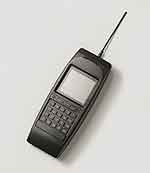 In Ameritech’s pre-paid division, we achieved for our 29 stores a 40% share. This was in competition with hundreds of other dealers and the company-owned stores in five states.
Competitors used the same ads for everyone. We broke the market into three segments and did three versions of each TV and radio spot. They were targeted to general, Afro-American, and Spanish-speaking market segments. Big success.
Since the featured phones changed every two or three weeks, we would create and produce new spots to keep the messaging up to date.
In the Chicago market at the time, cell phones were marketed almost exclusively to business users as we had done previously with pagers.
We were the first to branch out to general users, which soon eclipsed the business and professional users in volume. (Not sure I’m proud of this!)
During this time I moved from writing copy to actively engaging in design, layout, and video production. Then my interest in photography, especially fashion photography took a hold of me.
Fashion & Beauty Photography
After spending time with the fashion models I used for some Panasonic Car Stereo ads, the fashion world beckoned me.
 Looking for new challenges, I moved into professional fashion photography. Taught myself the requisite skills in about six months while writing ads for cell phones.
My fashion work was mostly advertising and catalog with some editorial work.
The new field offered interesting aesthetic challenges, new marketing opportunities, world travel, and a very glitzy social life.
 I kept two advertising accounts, the cell phone chain and a downtown Chicago hotel, and resigned the others. A year later, my photography business was so intense I had to resign my remaining advertising accounts. I still did certain interesting projects when they arose.
Most of my writing from that point on was for webpages, especially landing pages for sites I created. I also created content for some existing clients, especially in the area of canine health and welfare.
I began to design websites, motivated to acquire the skills to do my own sites and save the large fees they were charging.
I became a master of Flash, which was then the rage, so I could have impressive animated sites for my photography business.
Eventually the day came when Flash achieved its goal for market penetration. I had invested much time and effort in mastering Action Script and Flash techniques. I had an extensive library of Flash manuals the size of telephone books.
Then it died! First gradually, then suddenly. It was time to say goodbye. I moved on to HTML and later to WordPress sites. SEO was another skill I worked on for those pages and sites.

Executive Portraits
In recent years my photography was mostly doing executive and professional portraits forlarge international law and financial firms. I still did some fashion and commercial shoots.
The schedule was often feverish.
One of my early clients was the law firm Latham & Watkins, the world’s second largest firm. At the time I had only fashion samples in the portfolio.
They hired me anyway  and had me shoot many thousands of lawyers in Chicago, NYC, and D.C. over a 20-year period.
But with the beginning of Covid in March, 2020 and with very few people working in the office, most of my business portrait photography collapsed. Some is trickling back.
Recently I decided to move back to copywriting, especially looking for assignments where my verbal and visual skills and could work together.
The New Old Way of Doing Ads
The separation between copy and art that still exists in most ad agencies once served a useful purpose. Writer and art director teams worked together to achieve spectacular results.
That bifurcation between words and images is no longer ideal. In fact many teams were breaking down the divide for a long time. It harkens back to the ’50s and early ’60s when the copywriter worked alone and not as part of a team.
In the first ad I created with my favorite art director, we used my visual idea. (The ad won awards or creative excellence and achieved four times the client’s sales goals.)
In the second ad we did together, we used his copy idea. We soon realized there was no need to segregate ourselves into different silos. We became co-creators in everything. And with my long experience as an image maker, there was no need for the team.
Digital Marketing
My new focus is copy and content creation that makes use of my years of experience in bothwriting and image making. I enjoy doing both sides of content creation, and appreciate the greater efficiency that comes when both sides work together.
Because of my everyday experience with dogs, dog people, and dog professionals, I chose canine health and well-being as a primary niche.