
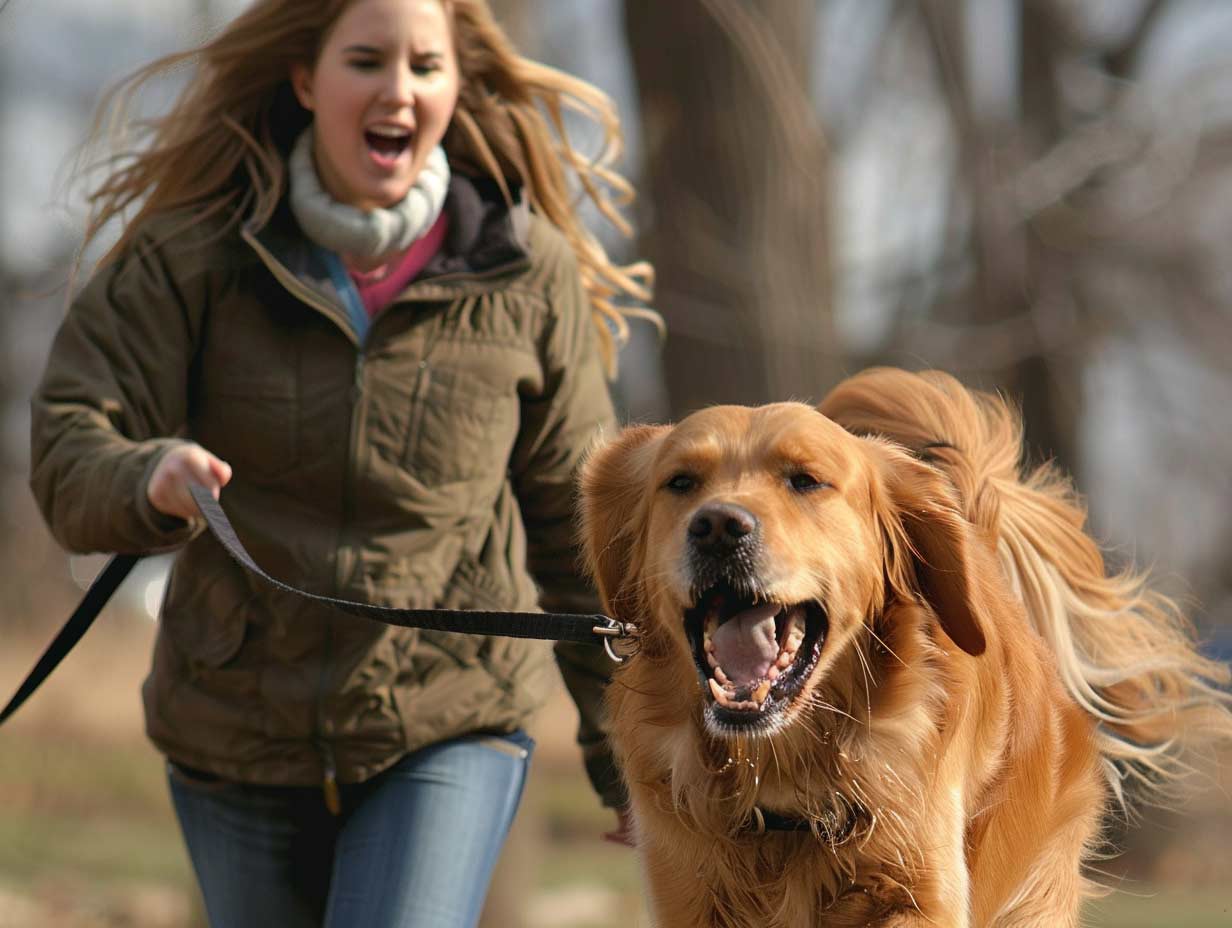
Reactive Dogs: The Agony of Having One
and the Ecstasy of Fixing Her
Reactive Dogs: The Agony of Having One and the Ecstasy of Fixing Her
I have one, and it’s a major problem every day. But I love her more than I could ever describe. So I need to find a fix.
The Dangers of a Reactive Dog
Neighborhood streets are minefields. At any place and at any time, there could be an explosion.
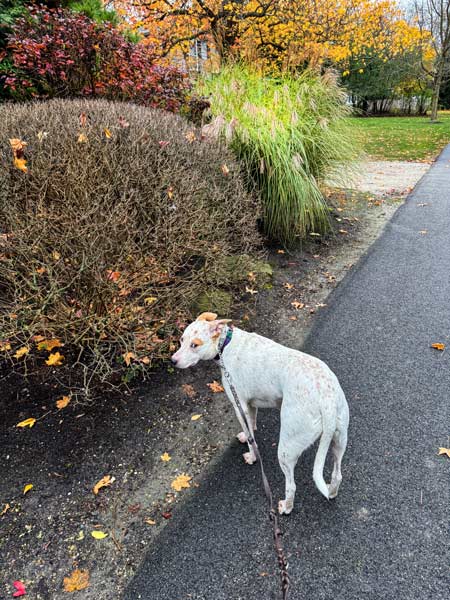
When a bike passes, Lola would bark, growl, and lunge. If a little kid runs or gets too close, my Australian Cattle Dog mix tries her best to chase and nip him. Does she think the kid is some wayward steer on the plain?
In good weather we meet lots of speeding bikes and running kids. They pop up everywhere. I can’t let my guard down for a minute or mayhem will follow. Other dogs, who may also be reactive, are another constant threat on our walks.
With any of my other dogs, I never had problems like this. But I have been bathed in them for the last year and a half since Lola came into my life.
It’s often overwhelming. But I’m never tempted to get rid of her, though I recognize that re-homing might is needed in some situations.
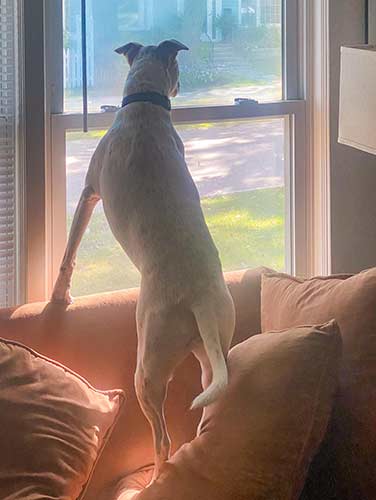
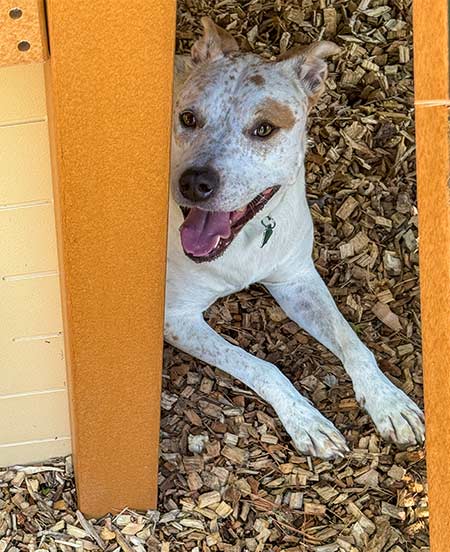
Lola Standing Guard – All photos by author
Then I found hope.
I found resources that helped me understand Lola’s problem behavior and showed me how to fix it.
It starts with a little knowledge. You need to understand why the dog is doing what she’s doing. Then take steps to reverse each of the problem behaviors.
I have not yet reversed all of Lola’s bad behavior, but there have been many partial fixes. They give me that hope.
Here’s an Example of a Bad Reactive Behavior I’m Working on Now
Strong reactions to people riding bikes. Barking, growling, lunging at the poor rider.
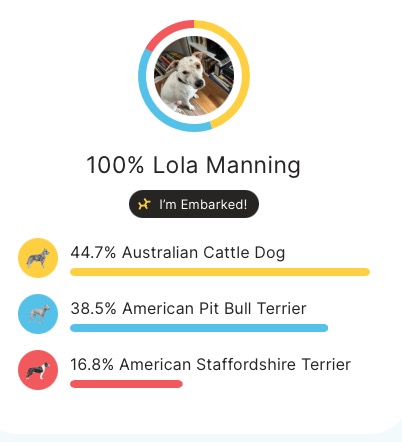
First I did a DNA breed test. She came back as 44.7% Australian Cattle Dog and 55.3% Pit Bull.
My last dog was a pit bull who never growled, almost never barked, and never chased anything except rabbits and squirrels in our first year together. So I suspected Lola’s behavior came from the cattle dog half of her background.
Then I learned about the breed. On YouTube and TikTok I found countless videos from owners and trainers of cattle dogs. Then I began to understand the breed.
Lola was not being “bad” or rebellious. She was behaving as she was carefully bred to behave. Most of her “bad behavior” related to herding, which is what she was bred to do.
If a cattle rancher buys a cattle dog who does not chase animals and nip those animals when needed to control their movements, he wants his money back. That dog might be a lovely pet, but is of no use on the ranch.
Then I found out from Lola’s foster parent that Lola had worked with cattle before I adopted her and enjoyed it. How much experience she had with this I don’t know.
Without Some Knowledge, You’re Lost
Imagine an owner who didn’t know Lola was a cattle dog or didn’t know what cattle dogs do. What would he think about her strange behavior? This behavior might have been unlike anything he’s ever seen with other dogs.
A little knowledge fixes that misunderstanding. And it shows you how to fix the bad behavior.
Fixing Reactive Behavior in a Dog: 3 Big Tools
I read several animal behavior books and watched training videos. (See the references at the end of this article.) According to them, the main steps to take were desensitization, counter conditioning, and reinforcement .
• Desensitizing – Expose your dog to the triggers they fear, but in a diluted, gradual way until he gets more accustomed to them.
Suppose your dog is afraid of thunder. You can make or get a recording of thunder to play at a low volume so it’s not so scary. Then gradually increase the volume over a period of time. The thunder sound will no longer trigger fear. The next time it rains, the thunder will not bother your dog.
• Counter Conditioning — You replace a bad habit with a good one.
Suppose your dog barks and growls at strangers on the walk. His reward for this bad behavior is keeping the strangers away from him. Counter conditioning aims to replace that barking with sitting and getting a treat as the stranger gets closer.
• Reinforcement — You get the dog to repeat the good behavior making it into a habit.
Every time your counter conditioning works, and the dog repeats the good behavior, it becomes easier for the dog to repeat that behavior instead of the bad behavior. It also works the other way around. Every time you fail and he does the bad behavior, that too will be reinforced.
Getting Lola to Stop Reacting to Bicycles
So I started by desensitizing Lola to bikes. I counter-conditioned her into feeling that encountering a bike is a good thing.
It’s working!
Now when I see a bike approaching, I tell Lola to look at the bicycle with a favorite treat in my hand. Then she sits in front of me and looks at the treat. She focuses her energy on getting the treat instead of chasing the bicycle.
If I do this early enough, Lola gets excited about getting the treat rather than chasing the bike. Our success rate is almost 100%. Up from 0% a couple weeks ago.
No barking, no growling, no lunging.
Now when Lola sees a bike approaching, she sees it as an opportunity to get treats. If she sees the bike before I do, she comes over to get her treat without my even saying anything.
On those rare occasions when the bike gets really close before either of us is ready, she goes nuts same as before.
Two warnings to keep in mind.
Timing. You must get the timing right. Give the treat too soon, and she won’t associate it with the bike.
Give it too late after she’s already in full attack mode, it will have no effect. There’s a point of no return. Once you’re past that, a whole bag of treats would have no effect.
The second warning is about reinforcement. Suppose Lola does a good behavior, such as not barking at the approaching bicycle. It will be easier for her to repeat that good behavior next time.
The good behavior was reinforced. But if she fails, it will be easier for her to fail again next time. So you need to prevent the failures. Don’t let your dog practice bad behavior and reinforce it.
These are the principles of conditioning. They also work to change the behavior of dogs who are generally well behaved. This is one of the main reasons training works.
Something that makes it easier to fix bad behavior
If the out-of-control dog has too much energy, and usually they do, tire her out. Give her enough physical and mental stimulation so she can burn off excess energy. She will find it easier to respond to your efforts.
As soon as I adopted Lola, I saw how energetic she was. It was like she could go from 0 to 100 instantaneously. The slightest trigger would cause an explosion of reaction. But then I noticed that coming home from long walks she was much more calm than she was in the beginning. So the end of the walk would be the best time to work on desensitizing and counter conditioning.
My hopes for Lola’s rehab
Living in the daily drama of life with an uncontrollable dog is a traumatic experience. Just think of what might happen to you and your puppy if there is a bad accident that results from her behavior.
As I live through it myself, I have empathy and understanding for other pet owners with this problem. Dark fantasies of court orders to seize and euthanize my beloved companion have haunted me on more than one occasion. Sometimes we defy the orders, and “go on the lam” together, refusing to be separated. Other times we can’t even think about it.
But as I mentioned at the top of this article, in most cases there is hope. And once you get started on the path we described, you’ll see that hope realized sooner than you think.
I can even imagine a day where Lola meets unfamiliar people and dogs without threatening them. And sees people riding bicycles without chasing them. I see a day where she’s as sweet to new people and dogs as she is now to the ones she knows.
And it makes all the effort worth it.
References
Introduction to Desensitization and Counterconditioning
A short, clear intro from VCA Animal Hospitals
https://vcahospitals.com/know-your-pet/introduction-to-desensitization-and-counterconditioning
Changing Your Dog’s Behavior With Desensitization and Counterconditioning
American Kennel Club
Counter conditioning and desensitization
Into from American Humane Society
https://www.animalhumanesociety.org/resource/counter-conditioning-and-desensitization
For the Love of a Dog, Patricia B. McConnell, Ballantine Books, New York, 2006
Chapter 5